Overview
This five-week program provides middle school and high school teachers of Latin or the ancient world, qualified graduate students in Classics or related areas, and college/university faculty with an in-depth understanding of the city of Rome through a careful examination of its topographical history and archaeological record.
What began as a cluster of Iron Age huts on a hill overlooking the Tiber River eventually grew to become the capital of a vast and multicultural empire that stretched across the Mediterranean basin. Rome’s development reflects a complex relationship with other peoples who inhabited the Italian peninsula, in particular Greeks and Etruscans. The city was periodically transformed as it expanded with the influx of newcomers and was continuously rebuilt following moments of human-made and natural crises. This program gives participants a comprehensive understanding of that process, looking at ancient Rome’s urban setting from the early Republican period through late antiquity, and considering the contiguous development of some of its neighbors in the Italian peninsula. Through close examination of a wide variety of evidence that includes architecture, visual representations, daily-life objects, epigraphy, and textual sources, participants obtain a deep understanding of the broader history of Rome as well as the individual experiences of a wide range of ancient peoples who inhabited the empire.
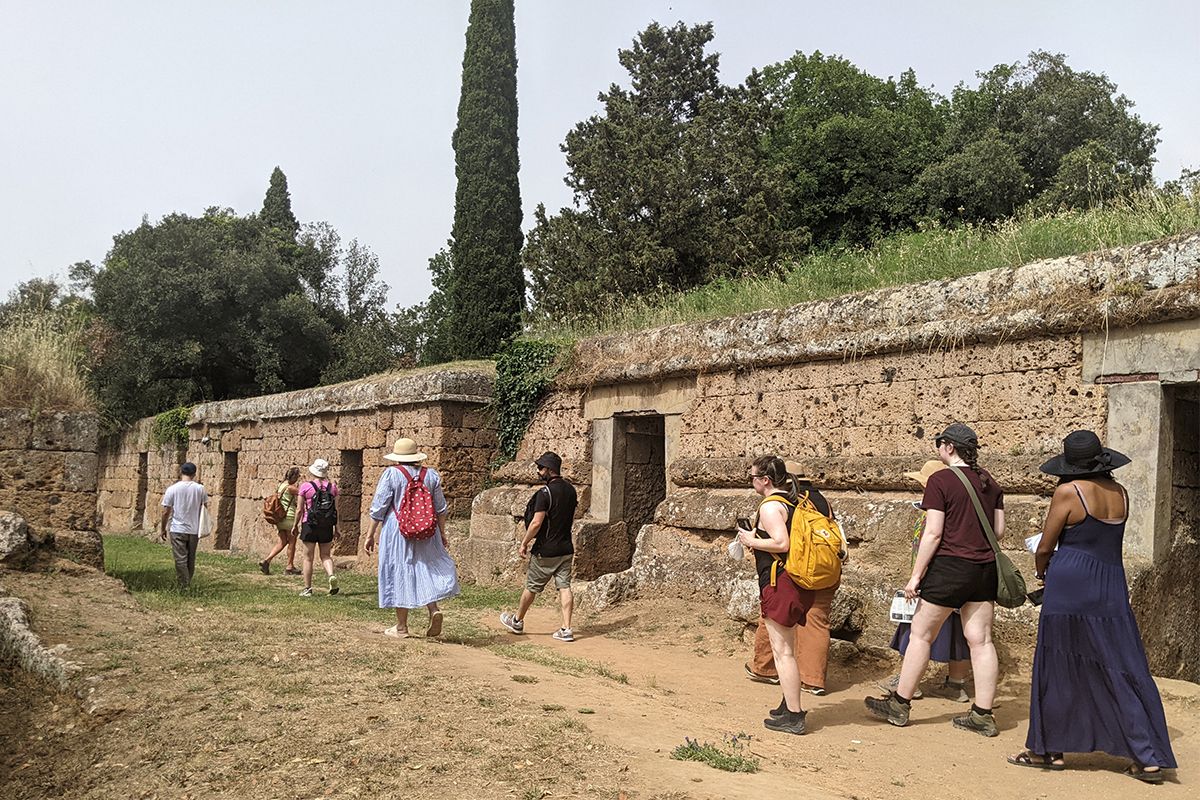
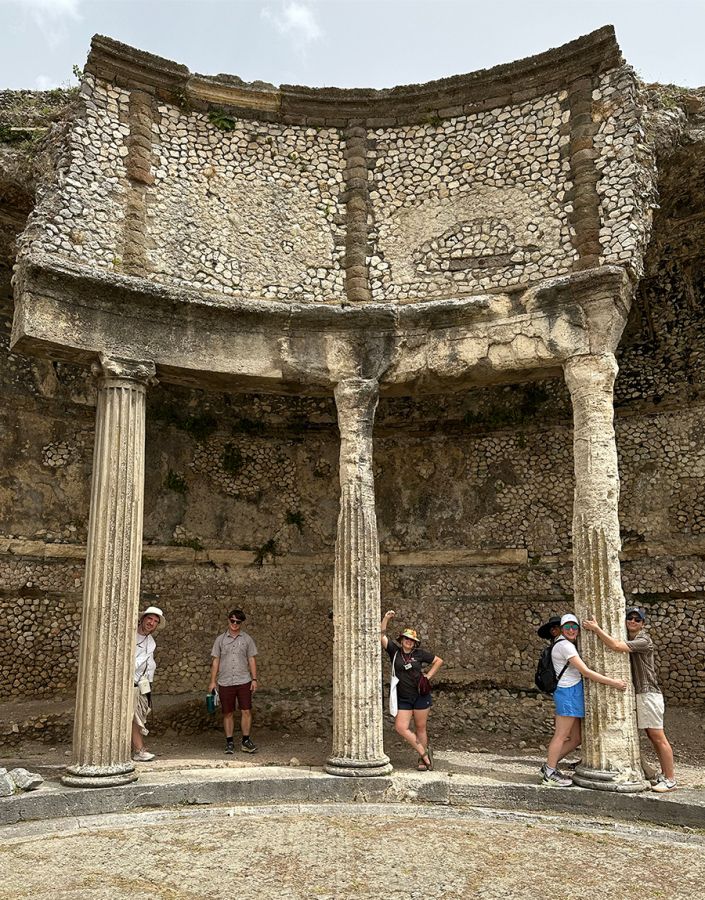
In 2027, the program will focus primarily on the city of Rome, with additional explorations of Etruria and the Bay of Naples. The first week will be based in Rome and will incorporate field trips to important Etruscan sites and early Latin colonies. The program then moves to the Bay of Naples during the second week, to explore the cities buried by Vesuvius in 79 CE and the important archaeological collections in local museums. We then move back to Rome for the last three weeks to focus on a topographically oriented study of the city, complemented by a few day trips to key sites in the region of Latium.
Director
Dr. Gretel Rodríguez, Assistant Professor of Ancient Art, Brown University
Email: cssdirector [at] aarome.org (cssdirector[at]aarome[dot]org)
2027 Program Dates
Sunday, June 20–Saturday, July 24, 2027
Application Deadline
Tuesday, December 15, 2026, 11:59 PM EST
Letters of recommendation must be submitted by this deadline to receive full consideration.
Notification of acceptance: early-February 2027
Notification of AAR scholarships: early-March 2027
Costs & Lodging
The program fee of $5,000 includes tuition, accommodation, some meals, and the cost of trips to sites included in the program. Participants without sources of funding are eligible for an American Academy in Rome scholarship (minimum of $1,500). While we work to provide scholarship support for all participants, high school teachers will receive priority.
The program will take place in Etruria, the Bay of Naples, and Rome, with almost four weeks based in Rome and the remainder in other locations. For the Rome-based portion of the program, participants will be housed for one week in a hotel and for three weeks in shared apartments. Some lunches and some dinners will be provided. The program fee does not include airfare, personal expenses (or additional, unplanned expenditures), some lunches/dinners, any travel not directly related to the program of the Classical Summer School, nor expenses such as laundry, tips, amusements, or shopping.
Application Materials
An application consists of a completed online application form, personal essay (up to two pages double-spaced), curriculum vitae, two (2) letters of recommendation, and, for undergraduate and M.A. candidate applicants only, academic transcripts. The personal essay should specify intellectual motivations for participating in the program; how this summer school will complement your existing knowledge; and how you would handle the conditions of the summer school. At least one of the letters of recommendation should be able to speak to the applicant’s character and ability to participate effectively in an intensive academic and social environment with shared accommodation. Please thoroughly read the 2027 Program Guidelines (link below) before completing the Classical Summer School application to understand the requirements of this intensive program.
Scholarship & Payment
Participants without sources of funding are eligible for an American Academy in Rome scholarship (minimum of $1,500 for those without any external funding sources). All successful applicants will be automatically considered for scholarship funding.
Applicants are also strongly encouraged to apply for funding and scholarships offered through their home institution, regional, and state classical organizations, however, these applications are submitted independently from the Classical Summer School application. Please see list of External Awards for Study (link below) for more information.
Successful applicants will be asked to pay a non-refundable deposit of $200 to hold their place. Program fee must be paid in full by May 1, 2027.