John Mulhall & Lorenzo Maria Ciolfi – Circolo Gianicolense Seminar
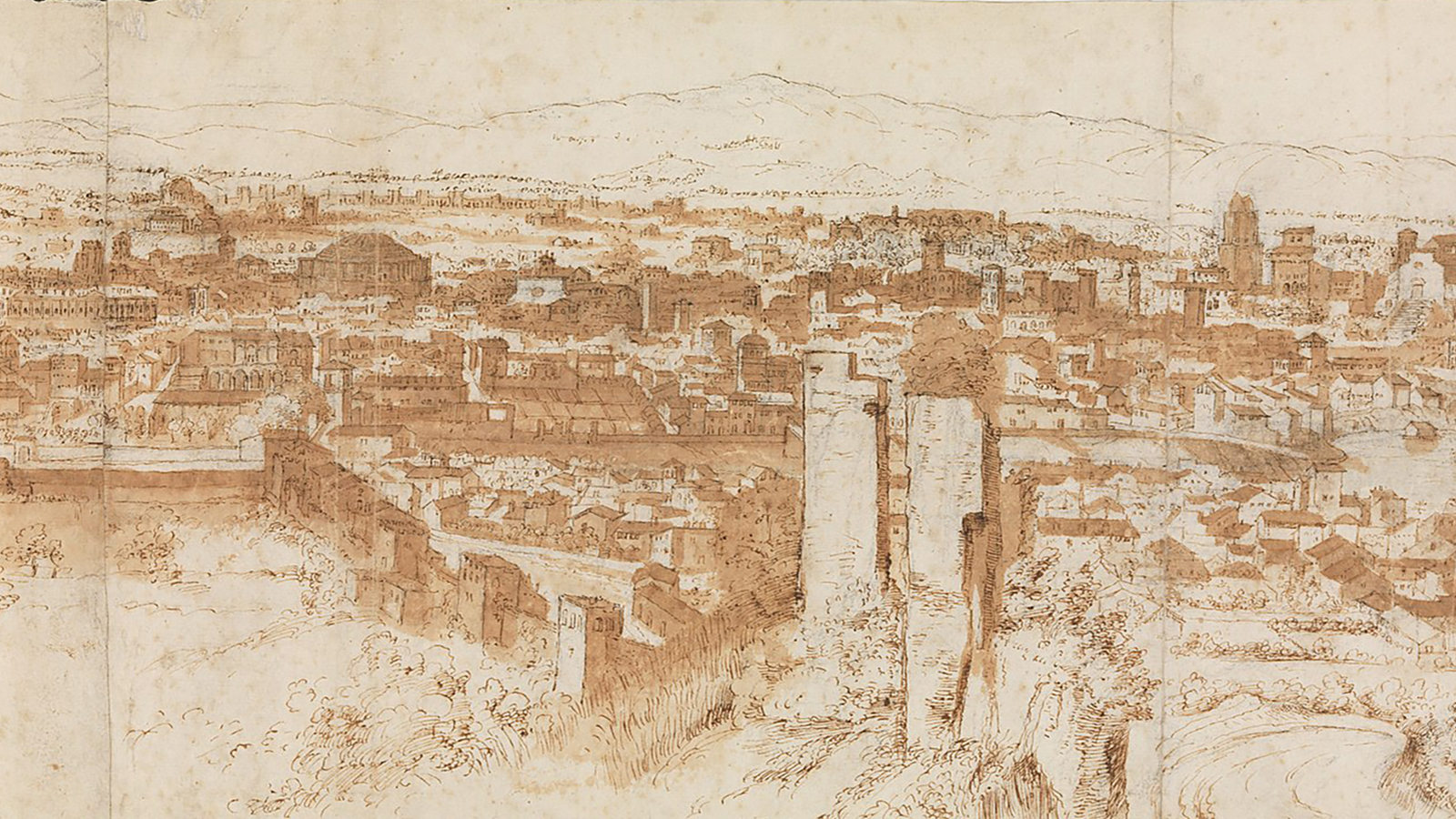
View of Rome from the Janiculum in the South-West
Circolo Gianicolense is a joint seminar series for fellows at three foreign research institutions at the Gianicolo: The Norwegian Institute in Rome, The American Academy in Rome, and Institutum Romanum Finlandiae.
Speakers:
John Mulhall (American Academy in Rome)
Lorenzo Maria Ciolfi (The Norwegian Institute in Rome)
John Mulhall (American Academy in Rome)
Blessings on All the Prophets: Islamic Prayers in the Latin Scientific Translations of the Twelfth Century
In the twelfth century, translators active in the Iberian Peninsula translated religious, scientific, and philosophical texts from Arabic into Latin on an unprecedented scale. More than one hundred and fifty texts were translated from Arabic into Latin in twelfth-century Iberia, many of which were written by Muslim authors. Given that the majority of the translators were Latin Christians, assessing these translators’ attitudes towards Islam has great potential to contribute to our understanding of intellectual interactions across religious boundaries in the medieval Mediterranean. To date, modern scholarship on the twelfth-century translators’ attitudes towards Islam have concentrated on translations of the Qur’an and other explicitly religious Islamic texts. The attitudes of translators of scientific and philosophical works have, however, been largely overlooked. This talk examines how Latin translators approached specifically Islamic elements such as Islamic prayers and blessings on the Prophet Muhammad in their translations of scientific and philosophical works.
Lorenzo Maria Ciolfi (The Norwegian Institute in Rome)
Arsenius, Erasmus, and Erpenius: Renaissance Paremiography and the Recovery of Ancient, Common, Wisdom
Owing to its intrinsic characteristics, which render it a literary form that is not only aesthetically pleasing but also remarkably effective in condensing and transmitting complex ideas and values, the proverb proves to be an exceptionally apt vehicle for cultural manifestos and for bridging diverse civilizations. In response to the renewed intellectual demands of the humanists, the Renaissance witnessed a significant flourishing of Greek and Latin paremiographic collections. These anthologies aimed to compile a veritable summa of ancient thought, presenting its wisdom in a distilled, accessible format. The profound success of this cultural endeavour ensured its vitality for centuries to come, ultimately extending its reach towards other civilizations beyond the classical world. Adopting the perspective of the proverb itself, this paper will chart the history of this revitalized proverbial fortune. It will focus specifically on the influential collections of Arsenius Apostolis and Erasmus of Rotterdam, examining their individual projects and their mutual influences. Furthermore, an exploration of Thomas van Erpe’s Proverbia Arabica will provide a basis for reflecting on the shared sayings and expressions that historically united the Mediterranean world, highlighting the proverb’s enduring role as a cross-cultural connective tissue.
For access to the Academy, guests will be asked to show a valid photo ID. Backpacks and luggage with dimensions larger than 40 x 35 x 15 cm (16 x 14 x 6 in.) are not permitted on the property. There are no locker facilities available. You may not bring animals (with the exception of seeing-eye/guide dogs).
The Academy is accessible to wheelchair users and others who need to avoid stairs. Please email us at events@aarome.org if you or someone in your party uses a wheelchair or other mobility devices so that we can ensure the best possible visitor experience. If you are someone with a disability or medical condition that may require special accommodation, please also email us at events@aarome.org.