Upcoming events

Tuesday, February 17, 2026–6:00 PM–9:00 PM
Rome
Black History Month

Tony Cokes: texts. tracks. (not an exhibition)

February 25, 2026
Rome
Material Environments

Sabine Huebner – Resilient Landscapes: Climate, Economy, and Human Adaptation in the Roman Sabina

Sabine Huebner – Climate Variability and Rural Resilience in Central Italy during the Second and Third Centuries CE

This is the fourth in a series of five lectures on Material Environments, hosted jointly by the American Academy in Rome and the British School at Rome over the academic year 2025–26. Through five evening lectures, speakers will present new research on environments of ancient and post-Classical Rome and Italy. Changing technologies of research provide new answers to questions about the experience and effect of landscape and climate. These lectures showcase the ways in which environmental considerations recast our study of the past.

March 16, 2026
Rome
Conference/Symposium

Material Ways of Knowing: Material Intelligence on the Eve of Artificial General Intelligence

Material Ways of Knowing: Material Intelligence on the Eve of Artificial General Intelligence

This event is part working group, part think-tank, and part walking seminar. A group of artists, archaeologists, and engineers/scientists will come together in Rome to develop an argument about the kind of knowledge that can be derived from materials of the past by bodies/agents in the world. 

Monday, March 30, 2026–6:00 PM–7:00 PM
Rome
Conference/Symposium

Sharing Our World with Birds: Andrea Crisanti, Jeanne Gang, and Francesca Manzia

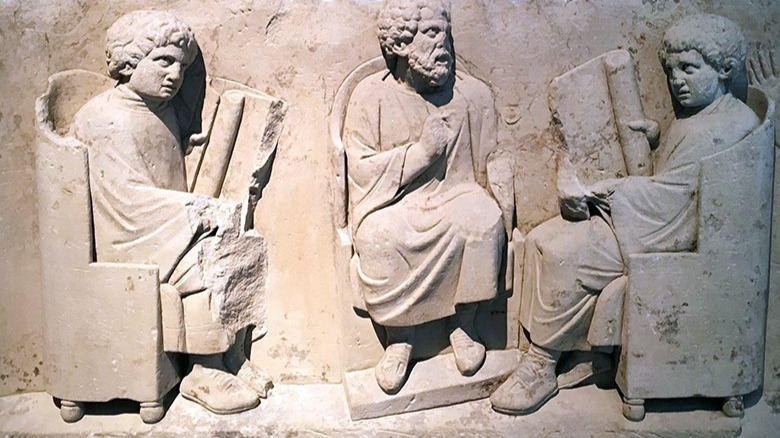
Roman mosaic panel, Museo Ostiense

The talk will explore the relationship between birds and cities through different perspectives: urbanistic, scientific, and naturalistic. The three speakers, scientist and microbiologist Andrea Crisanti, architect Jeanne Gang, and ornithologist Francesca Manzini, will come together for a wide-ranging conversation on birds. Together with curator Ilaria Puri Purini, they will explore their complex presence in cities, landscapes, and human imagination. Crossing science, design, and cultural observation, the discussion explores what birds can teach us about adaptation, coexistence, and the future of shared environments.

Monday, March 30, 2026–6:00 PM–9:00 PM
Rome
Exhibition

Exhibition Opening: Flight Paths

May 13, 2026
Rome
Material Environments

Michael McCormick – New Evidence for Roman History and Archaeology from the Science of the Human Past

Michael McCormick – New Evidence for Roman History and Archaeology from the Science of the Human Past

This is the final in a series of five lectures on Material Environments, hosted jointly by the American Academy in Rome and the British School at Rome over the academic year 2025–26. Through five evening lectures, speakers will present new research on environments of ancient and post-Classical Rome and Italy. Changing technologies of research provide new answers to questions about the experience and effect of landscape and climate. These lectures showcase the ways in which environmental considerations recast our study of the past.

May 27, 2026
Rome
Benefit

2026 McKim Medal Gala

2026 McKim Medal Gala

The annual McKim Medal Gala honors individuals whose work internationally, most particularly in Italy and in the United States, has contributed significantly to the arts and humanities.

June 18, 2026
Rome
Material Environments

Andrew Wilson – The Water-mills on the Janiculum and the Gothic Siege of Rome

Andrew Wilson - The Water-mills on the Janiculum and the Gothic Siege of Rome

This event has been postponed.

This is the third in a series of five lectures on Material Environments, hosted jointly by the American Academy in Rome and the British School at Rome over the academic year 2025–26. Through five evening lectures, speakers will present new research on environments of ancient and post-Classical Rome and Italy. Changing technologies of research provide new answers to questions about the experience and effect of landscape and climate. These lectures showcase the ways in which environmental considerations recast our study of the past.